

Santa Anna and Les Tries
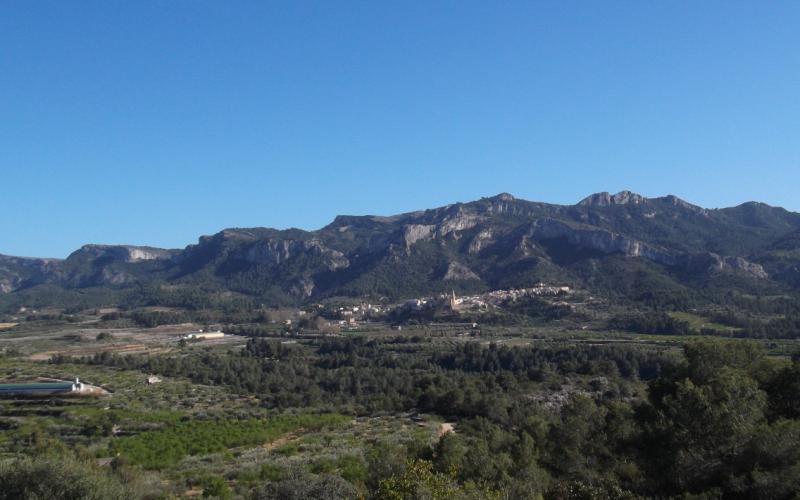
Circular route of approximately 6.8 km with a cumulative ascent of 155 m. Around 83.8% of the route follows tracks, with 600 m along the local T-304 road, and there are no water points. Part of the route follows the old ring road around Tivissa, now known as Passeig Dr. Ramón Jardí.
The hike begins on Passeig de la Foig, opposite the Tourist Office. Leave the village towards Vandellòs and the C-44 road. Before reaching it, take the turning on the left that follows Passeig Dr. Ramón Jardí and continue to the junction with the C-44. Cross the road and take the first track on the right, where a farmhouse can be seen. Continue along the track to the bottom of a small valley. Take the path heading north, passing ancient olive trees before reaching the local TV-3031 road.
Follow the road to the first kilometre marker, then take the turning on the left and continue along a track with several concrete sections. At the highest point of the track, just before another concrete stretch, a path branches off to the right leading to the ruined remains of the Santa Anna hermitage. Continue along the track and, after two sharp bends, take the path on the left that crosses terraces planted with almond and cherry trees and descends into a small valley. From there, take the path on the left through a small pine woodland. Continue until crossing the local ravine and reaching another track.
Follow the track until it makes a sharp turn towards the C-44 road. At this point, continue along a path running parallel to the valley until it reconnects with the track taken at the start of the route. Cross the road again and return towards the village via the old road. Take the second turning on the right (the northern entrance to Tivissa) and continue to the Font de l’Abeurador spring, where you should turn left towards the Tourist Office. On the right stands the Font de la Teula, and shortly before the end of the route is the Font de la Séquia del Camí. These three springs formed part of an extensive irrigation channel network that supplied the village orchards, extending for more than 2 km. Some abandoned sections of this historic system can still be seen today.
Share


 Print
Other routes
-

The Garretó tour
Distance: 3.08 km · Positive elevation gain: 120 m
-
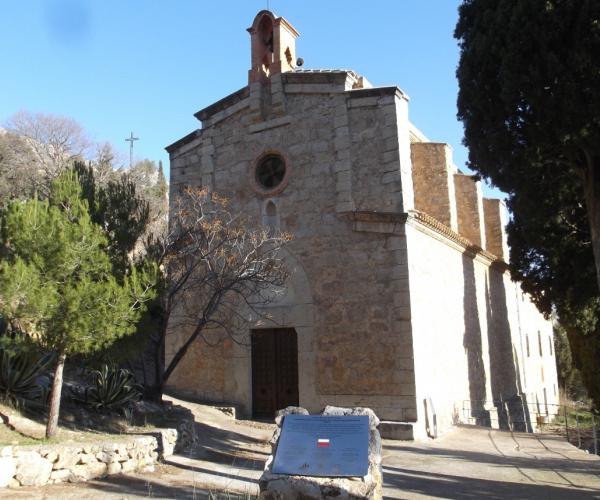
The Llena Climb and Sant Blai Hermitage (Birthplace of the GR Trails)
-
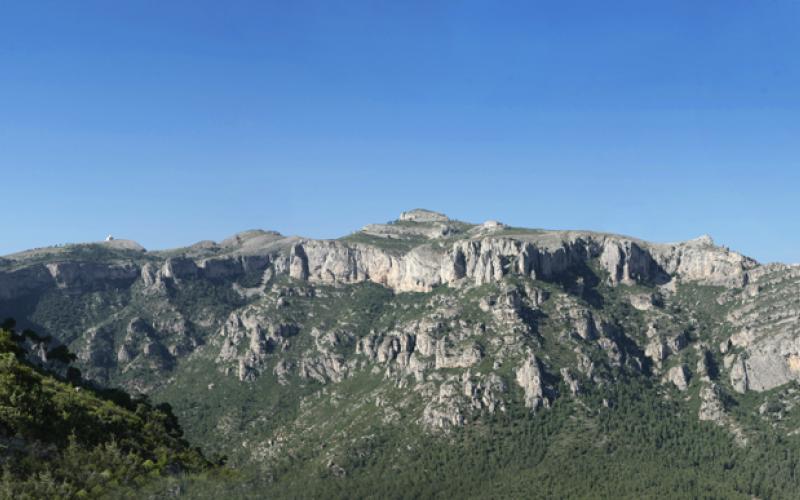
Dòvia Turn
Difficulty: High · Distance: 14 km
-
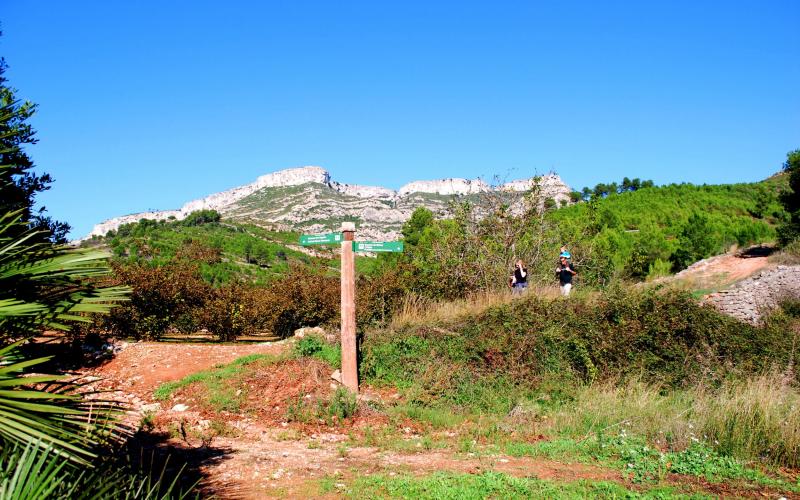
Santa Marina Turn
Difficulty: Low · Distance: 8 km
-
Torn Beach Route
Distance: 7.98 km · Positive elevation gain: 200 m
-
The Shaded Slopes of Els Borjos and Les Meliques